


Top Benefits of Arch Support Shoes for Comfort
Kicking off your shoes the minute you get home shouldn’t be the highlight of your day. While common knowledge blames daily foot fatigue on simply standing too long, the real culprit is usually missing structure. Your foot’s arch naturally acts as the body’s primary shock absorber—and orthopedic footwear is designed to reinforce that architecture when it is inadequate, overloaded, or mechanically inefficient.
Shoppers often misunderstand the crucial difference between cushioning vs support. Slipping into a pillowy sneaker feels great initially, but as clinicians frequently note, resting your weight on mere foam is like building a house on a foundation of sand. In practice, proper arch support footwear (a common feature in orthopedic shoes for women) actively aligns your stride rather than just letting you sink. By wearing firm arch support shoes, you trade a temporary squishy feeling for a sturdy foundation that can reduce end-of-day aches.
From Your Sole to Your Spine: How Orthopedic Arch Support Interrupts the “Domino Effect” of Pain
That dull ache in your lower back after standing on a hard floor might actually start right at your feet. When your arches flatten out, the strain travels upward through your entire kinetic chain. Recognizing the symptoms of fallen arches—like tired hips or heavy legs—helps explain the “Domino Effect” of poor biomechanical alignment.
Every time you take a step, your foot naturally distributes your body weight. If that internal structure gives way, your foot begins rolling inward, a common structural issue known as overpronation. Understanding your specific mechanics, such as an overpronation vs supination gait (rolling outward), is crucial because when the ankle tilts, your knee rotates and your lower back compensates.
Stopping this painful chain reaction often requires more than a pillowy soft insole. Structured orthopedic shoes for men with medial support and a stable rearfoot can cradle the heel, brace the midfoot, and reduce excessive motion. In practical terms, the biomechanical benefits of motion control can translate into less daily fatigue—especially for people who stand for long hours or have a history of plantar fasciitis pain.
The 30-Second “Wet Footprint” Test: Identifying Your Unique Arch Shape
Before you choose orthopedic arch support shoes, you have to know what foundation you are standing on. Testing foot arch type at home takes less than a minute. Try the “wet footprint” test:
-
Dampen the bottom of your bare foot using a wet towel.
-
Step naturally onto a piece of heavy paper or a dark floor.
-
Step off and examine the moisture left behind.
The image left on the floor reveals what your body demands from supportive footwear.
-
Flat Feet: If the print looks like a complete, wide block, you may benefit from orthopedic sneakers for flat feet.
-
High Arches: If you see only your heel and the ball of your foot, you need the specialized high arch support footwear designed for shock attenuation.
-
Neutral Arches: A footprint showing about half of your middle section suggests you need middle arch support shoes that balance stability and softness.
Anatomy of a Great Shoe: 3 Orthopedic Features to Look for Beyond the Style
We often assume squishy sneakers cure tired feet, but walking on pure cushion is like sleeping on a sagging mattress. True relief requires structural firmness. Try the “twist test” by wringing a shoe like a towel. If it folds easily, it likely lacks the medial arch stability features required to keep your joints aligned.
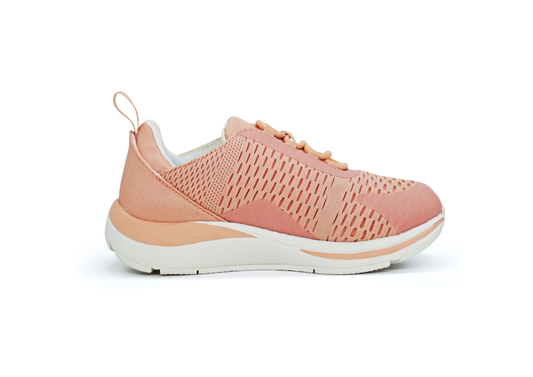
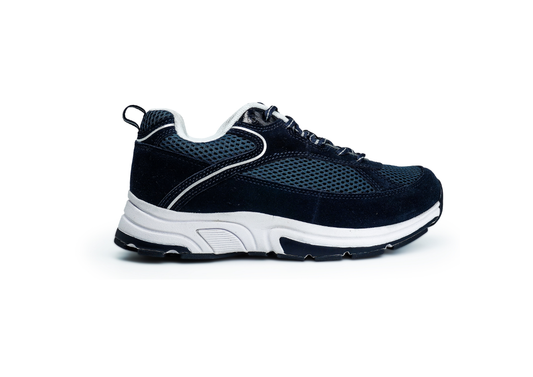
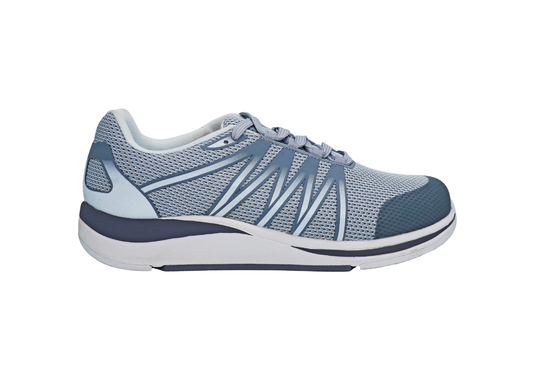
When evaluating a new pair, like the Sprinter Orthopedic Athletic Shoe or the Aaron Comfort Orthopedic Shoes, look for these design elements:
-
Deep heel cup stability: A recessed pocket cradling the rearfoot to limit heel drift.
-
Impact-absorbing midsole technology: Resilient foam tuned to attenuate repetitive loading, essential for heel pain relief.
-
Supportive midfoot chassis: A firm internal structure that reduces midfoot collapse and helps distribute load.
Whether at the Gym or the Grocery Store: Matching Support to the Activity
Every activity stresses your foundation differently. A high-intensity workout involves higher peak forces, which is why orthopedic athletic shoes with a stable heel counter are valuable. For daily errands, orthopedic walking shoes for women provide consistent, long-duration comfort.
Even at home or during summer, your arches need bracing. Transitioning to orthopedic sandals for women or mens orthopedic sandals ensures you don't lose the progress made during the day. For those with specific health needs, diabetic footwear offers the necessary protection combined with structural arch integrity.
Your 7-Day Plan for Moving Toward Pain-Free Walking
You do not have to accept daily foot pain as inevitable. Once you understand your foot mechanics, you can shop for arch support shoes with more precision.
-
Selection: Choose a pair like the Pursuit Women's Slip-On or Victor Men's Orthopedic Footwear based on your arch type.
-
Transition: Wear them for 2–3 hours a day initially to allow soft tissues to adapt.
-
Assessment: A practical success metric is simple: finishing a long day on your feet without needing immediate couch recovery.
Q&A: Arch Support Shoes as Orthopedic Footwear
Q: Are arch support shoes the same as orthopedic shoes? A: Not always. Many arch support shoes include a supportive insole, but therapeutic shoes typically emphasize medical-grade structural features like midfoot rigidity and pressure redistribution.
Q: Can orthopedic footwear help with arthritis? A: Yes, specialized arthritis footwear is designed to reduce joint stress and provide a stable base to minimize painful movement.
Q: Should I wear supportive shoes at home? A: Absolutely. Walking barefoot on hard floors can strain the fascia. Using orthopedic slippers for women or mens orthopedic slippers maintains your arch's alignment even when you're off the clock.
