


Benefits of Proper Foot Arch Support
Benefits of Proper Foot Arch Support
You finish a long shift and immediately kick off your shoes to stop that dull ache in your heels. While many people ask, "Why do my feet hurt after standing all day?" the answer often isn't the floor you stand on, but the space under your feet. Kinesiology principles show that when arches lack structure, they collapse like a suspension bridge with loose cables, forcing your foot muscles to work overtime just to keep you upright.
Think of your body like a house: if the foundation is slanted, the windows in the attic won't close properly. Your feet serve as this structural base, meaning a lack of proper foot arch support creates misalignment that travels all the way up to your knees and back. Whether you need specific foot support for flat feet or general stability, restoring this foundation transforms daily pain into lasting stamina.
Your Feet as Suspension Bridges: The Role of the Medial Arch
Every time your heel strikes the pavement, a force roughly one and a half times your body weight shoots upward. To manage this massive load, your foot relies on its most critical structure: the medial longitudinal arch. Visualize this arch—the curve running along the inside of your foot—as a biological suspension bridge. Just as a bridge is designed to bow slightly under the weight of traffic before returning to its original shape, your arch is built to flex under pressure rather than remaining rigid.
Rigid structures tend to shatter under stress, which is why your foot isn't a solid block of bone. Instead, a complex network of tendons and ligaments allows the arch to flatten slightly upon impact and then spring back. This natural elasticity acts as your body's primary shock absorption system, dampening the jarring vibrations of walking on concrete floors or tile aisles before they can damage your knees or hips.
Without adequate stability, the medial longitudinal arch functions improperly, struggling to manage the daily grind. Proper foot arch support preserves these three essential capabilities:
-
Weight Distribution: Spreading pressure evenly across the foot.
-
Shock Absorption: Minimizing impact on the skeleton.
-
Terrain Adaptation: Adjusting to uneven ground.
But if the suspension bridge collapses too far inward, it disrupts the entire system—a mechanical failure we call the inward roll.
The Inward Roll: How Collapsed Arches Disrupt Your Stride
When the suspension bridge of your foot flattens too drastically, the structure doesn't simply lower; it twists. This excessive inward rolling is called overpronation, a mechanical failure where the arch collapses and the ankle dives inward to compensate. Instead of absorbing shock, a foot in this state transfers that jarring force directly into the tendons, forcing them to work overtime just to keep you upright.
That sharp, stabbing pain in your heel when you take your first step out of bed acts as the loudest warning signal. This sensation occurs because the connective tissue is being stretched beyond its limit, creating one of the most common symptoms of collapsed arches. To interrupt this cycle of strain, the foot requires the structural guidance of specific arch supports designed to prevent that excessive twist before it begins.
You can often spot the evidence of this instability without a doctor. Flip over your favorite pair of well-worn sneakers; heavy wear on the inner edge of the heel suggests your foot is rolling inward with every step. While this pattern explains sore feet, the real danger is that this tilt pulls on the "alignment string" of your body, creating issues that travel far above your ankles.
From Heels to Hips: How Proper Alignment Stops the 'Alignment String' from Pulling Your Skeleton Out of Place
Your skeleton functions as a series of connected gears rather than isolated parts. Medical professionals refer to this interconnected relationship as the kinetic chain, implying that movement in one area dictates mechanical stress in another. When your arch collapses, your shin bone is forced to rotate inward, acting like a wrench twisting against the hinge of your knee. This misalignment forces the joint to operate at a damaging angle, turning a simple walk into a source of friction and eventual pain.
The disruption rarely stops at the knee because the thigh bone must follow the shin’s inward rotation. This chain reaction tilts the pelvis forward, forcing your spine to arch excessively just to keep you standing straight. Many people treat the significant impact of foot alignment on lower back pain with massages or heating pads, unaware that the root cause is located at ground level. If the foundation is slanted, the walls of the house will crack regardless of how much you repair the drywall.
Correcting this systemic imbalance requires stabilizing the foundation before the rotation begins. Inserting structured flat foot orthotics into your shoes restores the natural geometry of the foot, effectively pulling the alignment string tight and snapping the knees and hips back into neutral positions. Once the structural stress is relieved, you need to navigate the confusing marketplace of inserts to find exactly what your body needs.
Buying the Right Support: Choosing Between Soft Gel Insoles and Rigid Orthotics
Walking into a pharmacy, your instinct might be to grab the softest, squishiest gel pad available. While that "walking on clouds" sensation offers immediate relief, softness is deceptive. Compare it to a mattress: a bed that is too soft causes your back to sag, and a shoe insert without firmness lets your arch collapse. While cushioning absorbs the initial shock of impact, true arch support insoles must act like a rigid beam, providing the structural stability needed to keep your skeleton aligned.
Effective orthotic arch support requires materials that actually push back against your foot. Whether you are debating custom orthotics vs over-the-counter insoles, the most reliable quality check is the "Thumb Test." Press your thumb hard into the arch of the insert; if it flattens easily, it is too weak to hold up your body weight. You need a device that offers resistance, guiding your foot into a neutral position rather than just padding the fall.
To ensure you select the best insoles for your daily needs, match the material to the function:
-
Cushioning (Gel/Soft Foam): Best for high, rigid arches needing shock absorption or short-duration comfort.
-
Structural Support (Semi-Rigid Plastic/Cork): Essential for flat feet, overpronation correction, or standing 4+ hours on concrete.
With the right gear protecting your foundation, you are ready to build lasting stamina.
Your 10,000 Step Action Plan: Taking the Pressure Off for Good
You no longer have to accept foot fatigue as the price of a busy day. By treating your feet as the foundation of your body's kinetic chain, you stop managing pain and start preventing it. Prioritizing posture through corrective footwear ensures your internal shock absorbers work efficiently, protecting your knees and back from the ground up.
Start building a stronger foundation today:
-
Check Your Shoes: Inspect old soles for uneven wear that signals alignment issues.
-
The Wet Foot Test: Step on a paper bag with wet feet to visualize your arch shape, which is essential for knowing how to choose the right arch support.
-
Upgrade Gradually: Break in flat foot correction insoles slowly to let muscles adapt.
With proper support, you can clock 10,000 steps without thinking about your feet once.
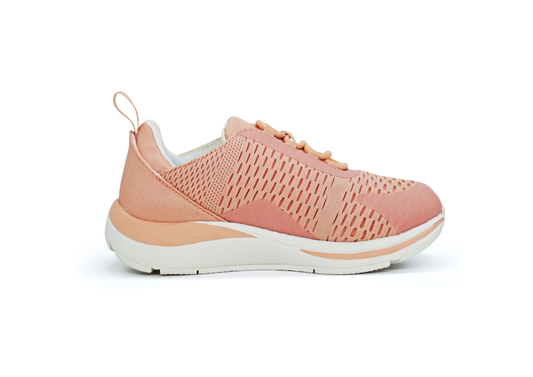
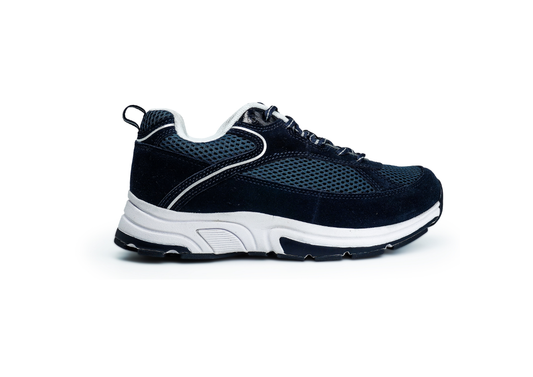
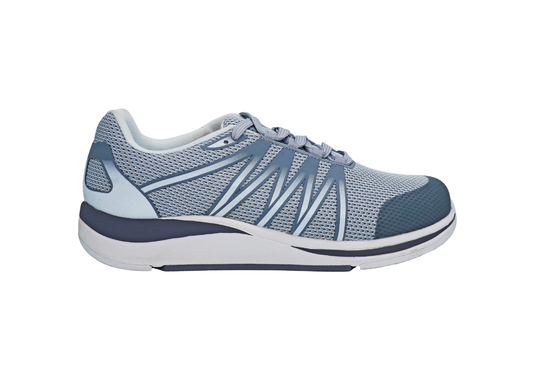
Check our collection of Mens Shoes and Womens Shoes for your specific condition.
