Choosing the Best Shoes for Plantar Fasciitis
You know that sharp, stabbing sensation the moment your feet hit the floor? It feels exactly like stepping on a jagged pebble that isn't actually there. That sudden heel pain is your body's alarm bell.
According to podiatrists, the tissue under your foot behaves just like a tight bowstring. Overnight, this string shrinks, which means your first steps forcefully stretch the ligament. Choosing the right plantar fasciitis shoes for morning stiffness serves as your primary defense against this daily strain.
Many shoppers assume pillow-soft soles will automatically cure the ache. Yet, true relief requires finding footwear that delivers firm, structural stability rather than simple squish. In therapeutic shoes, that stability is the point: the shoe is built to manage load, guide alignment, and reduce tissue strain with repeatable support.
Why 'Memory Foam' Might Be Worsening Your Heel Inflammation
When you step into memory foam, it quickly compresses under your weight until nothing is left to absorb the shock—a process called "bottoming out." Instead of acting like a sturdy bridge for your foot, the shoe collapses. This lack of structural integrity stretches your plantar fascia ligament, making your morning pain even worse.
Finding real relief means understanding the difference between cushioning and structural stability. Heel pain shoes prioritize shape retention under load: the midsole must hold your arch up rather than simply feel soft. Consider how these common shoe materials compare:
-
Memory Foam: Feels wonderful initially but flattens out, offering zero arch stability.
-
EVA Foam: Lightweight and firm, balancing comfortable shock absorption with structural shape retention.
-
Polyurethane: Highly durable and dense, providing excellent long-term support.
Walking on collapsed foam forces your heel to absorb harsh daily impacts. Replacing worn-out midsoles prevents heel spurs and aids recovery.
The 3-Point 'Shop-Floor' Test: Spotting Orthopedic-Grade Support
Before you buy, use these three physical evaluations to ensure your footwear provides orthopedic-grade support:
-
The Fold Test: Try to fold the shoe in half. It should only bend at the toes. If it folds like a taco in the middle, it lacks biomechanical support.
-
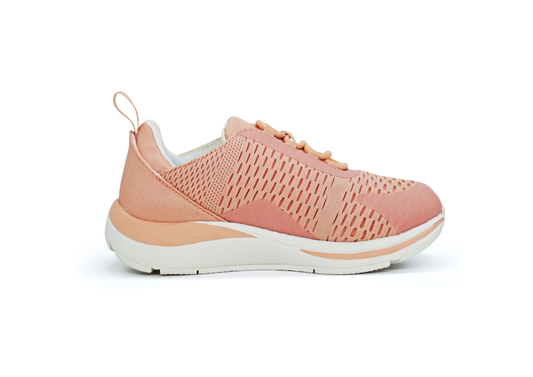
The Wring Test: Twist the shoe like a wet towel. You are checking for torsional rigidity. High-quality options, like orthopedic athletic shoes for women, feature a rigid shank to keep your arch stable.
-
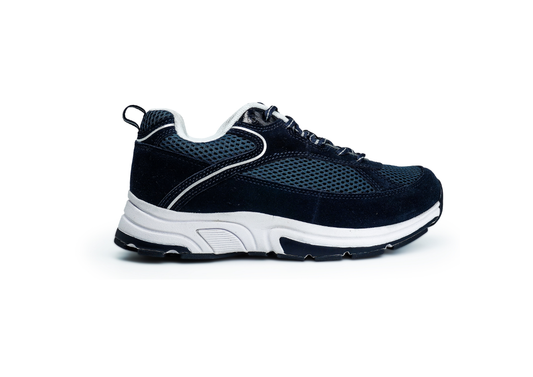
The Heel Counter Test: Press your thumb against the back of the heel. It must be stiff. A firm heel counter, found in professional orthopedic shoes for men, locks your ankle upright to prevent strain.
Tailoring Your Fit: High Arches vs. Flat Feet
Just because a shoe is sturdy doesn't mean it fits your specific mechanics. If your feet are flat, your ankles likely roll inward (overpronation), overstretching the ligament. Conversely, high arch (pes cavus) feet lack natural shock absorption.
Determine your profile using the "Wet Foot Test":
-
Dampen your soles and step onto heavy paper.
-
A wide, solid print indicates flat feet (pes planus), requiring motion-control shoes.
-
A thin outer line means high arches, requiring neutral gait shoes with extra impact protection.
Maintaining Support in Every Scenario
From the office to the weekend, your protection shouldn't stop.
Q&A: Orthopedic Footwear and Plantar Fasciitis
Q: What makes a shoe truly “orthopedic”?
A: It's the mechanics. True mens shoes (orthopedic) or womens shoes (orthopedic) combine a firm heel counter, deep heel cup, and a midsole that resists collapse.
Q: Are plantar fasciitis shoes for women different?
A: Yes, in fit. Women's orthopedic walking shoes are often built on a different "last" to accommodate narrower heels and different instep volumes.
Q: What if I have other conditions like arthritis?
A: You should look for specialized arthritis footwear that reduces joint stress while providing the same stable foundation required for heel pain relief.
Your Step-by-Step Path to Pain-Free Walking
Replace your everyday pairs every 300 to 500 miles to ensure the midsoles haven't lost their integrity. Whether you prefer slip-on orthopedic shoes for convenience or running shoes for activity, always verify the structural foundation first.
New Shoe Checklist:
Every step you take in properly supported shoes helps relax that strained "bowstring" in your foot, moving you closer to a life without heel pain.