


Effective Nerve Pain Relief: Top Foot Care Tips
How to Treat Nerve Pain on Top of Foot (With an Orthopedic Footwear Focus)
A burning, tingling, or “electric” sensation across the top of the foot is often a sign of nerve irritation rather than a simple strain. In many cases, the trigger is mechanical: a shoe upper, tongue, or laces compressing the superficial nerves that run over the midfoot (sometimes described as dorsal foot nerve compression).
If your goal is to learn how to treat nerve pain on top of foot, start by treating footwear as your primary “intervention,” then add targeted mobility, home remedies for nerve pain in feet, and medical evaluation when symptoms persist or progress. Using specialized orthopedic footwear can provide the immediate structural relief needed to decompress these sensitive areas.
Is It Tendonitis or a Pinched Nerve?
Top-of-foot pain can come from extensor tendon irritation or from nerve compression/irritation. The distinction matters because tendon pain often responds to load management, while nerve pain typically improves when you remove pressure and optimize shoe/orthotic mechanics.
-
More consistent with tendonitis: Deep ache that worsens with active toe-lifting (dorsiflexion) and improves with rest.
-
More consistent with nerve pain: Burning, numbness, tingling, or shock-like zaps that may occur even at rest, and often worsen with tight shoes or laces.
If the discomfort reliably flares inside certain shoes, that pattern strongly suggests a footwear-driven compression component.
Footwear First: Remove Dorsal (Top-of-Foot) Compression
Many people “solve” foot instability by tightening laces, but that strategy can backfire: the top of the foot has minimal soft-tissue padding, so pressure is transmitted quickly to the nerves. The simplest, most effective step is to reduce dorsum pressure while maintaining midfoot stability.
What to look for in orthopedic-friendly shoes
The best footwear for dorsal nerve compression is not necessarily “softest,” but the most mechanically accommodating:
-
Extra depth / higher instep volume: More vertical room so the tongue and lace row don’t press into the nerve pathway.
-
Soft uppers: For women, the pursuit womens slip on orthopedic shoes offer a flexible fit that minimizes top-down pressure.
-
Well-padded tongue: Distributes lace pressure over a larger surface area.
-
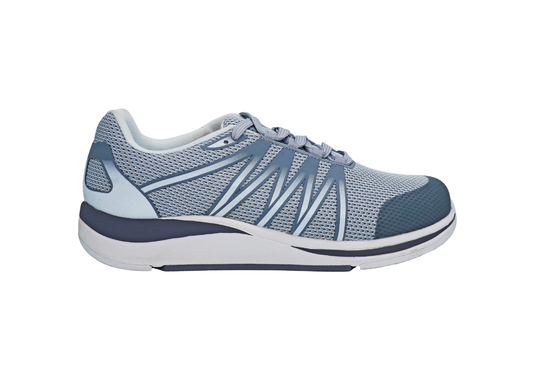
Stable platform: A shoe like the aaron comfort orthopedic shoes for men allows you to keep the fit relaxed without losing support.
Lacing modifications
To unload a specific pressure point, use “window lacing” (a gap over the painful segment):
-
Unlace down to the eyelets just below the pain.
-
Run each lace straight up on its own side (skip crossing over the sensitive area).
-
Resume crossing above the zone and tie with minimal tension.
Orthotics and Insoles: When “Support” Helps (and When It Hurts)
Orthopedic footwear is not only about the shoe; it is also about how your foot is loaded inside it. Insoles can be useful if they stabilize the midfoot, but they can worsen dorsal nerve pain if they raise the foot too high.
If you struggle with significant foot fatigue or collapse, browsing the mens shoes orthopedic or womens shoes orthopedic collections can help you find models designed with removable insoles to customize your space. For those with sensitive feet due to systemic conditions, the stable mens orthopedic walking shoes diabetic provide a protective environment that prevents friction and compression.
Gentle Mobility: Nerve Glides and Extensor Tendon Relief
Once you have reduced shoe compression, gentle mobility can help calm an irritable nerve.
-
Peroneal nerve glide (seated): Straighten the leg, slowly point toes down/inward, then gently pull toes up toward the shin; repeat 8–10 cycles.
-
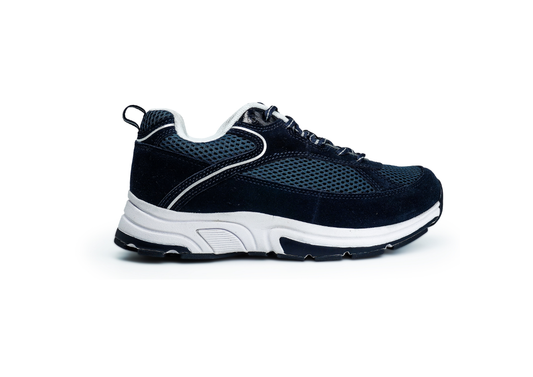
Active Recovery: For daily walks, the player mens orthopedic walking shoes or the balance running shoes womens provide the necessary shock absorption to let your nerves rest while you move.
Home Care That Pairs Well With Footwear Changes
These options are commonly used as home remedies for nerve pain in feet:
-
Cold packs: 10–15 minutes to reduce irritability after activity.
-
Indoor Support: Avoid walking barefoot on hard tiles. Slipping into the breezy slipper footwear womens ensures your feet stay aligned even at home.
-
Open Footwear: During flare-ups, adjustable straps are your best friend. Consider the sawyer womens orthopedic sandal diabetic comfort or the jackson mens orthopedic sandal diabetic comfort to eliminate top-of-foot pressure entirely.
Q&A: Orthopedic Footwear and Top-of-Foot Nerve Pain
What shoes are best for nerve pain on top of the foot?
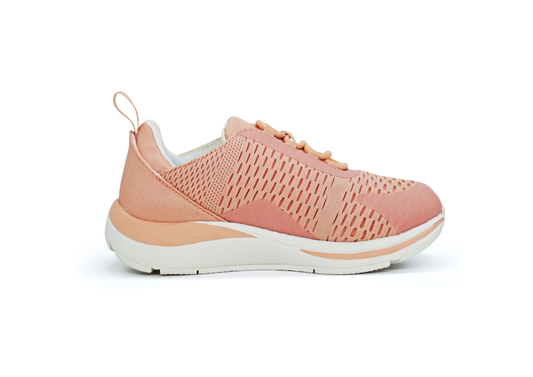
Look for extra depth and minimal overlays. The contest mens orthopedic walking shoes for men and the sprinter orthopedic athletic shoe rose womens for women are designed to accommodate the foot's natural volume without pinching.
Is walking barefoot better or worse?
It depends on your mechanics. Barefoot walking reduces compression from uppers, but lacks support. A supportive, open option like the buttercup orthopedic sandal women is often the perfect "middle ground" during recovery.
When should I see a doctor?
Seek professional care if you have progressive numbness, weakness, or "foot drop." If symptoms are not improving after modifying your shoes, an evaluation is warranted.
Step Into Comfort
Establishing a routine with the right gear—whether it's for the gym or the living room—is the fastest way to silence nerve pain. Patience and proper mechanics are your best tools for long-term relief.
