
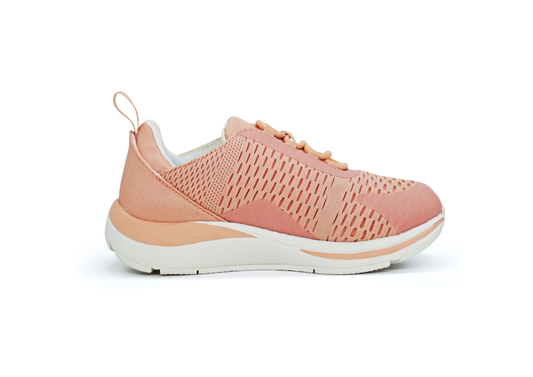
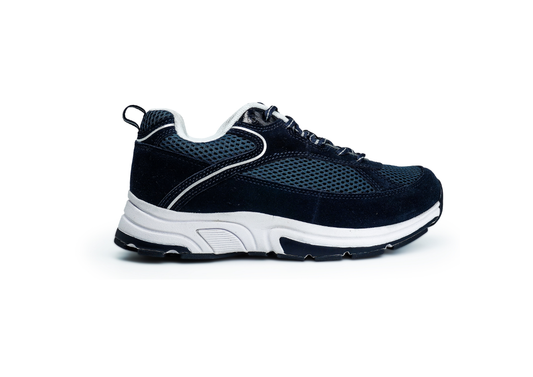

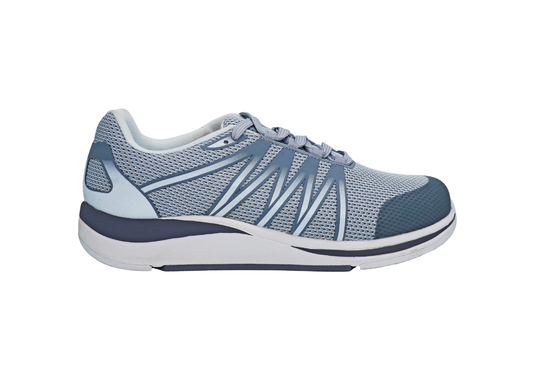

Best Ankle Support Shoes for Pain Relief & Stability
Ankle Support Shoes: How to Choose the Best Pair for Pain Relief and Stability

We’ve all been there: a slight unevenness in the sidewalk, a sudden pivot, and that sickening roll of the foot. After a sprain, many people instinctively reach for the stiffest boots they can find. But choosing the right ankle support shoes—especially if you’re shopping in the orthopedic footwear category—means balancing protection with healthy, natural movement.
Think of orthopedic ankle protection shoes as a house's foundation, built to absorb shock, guide alignment, and reduce strain on irritated tissues (like ligaments and tendons) rather than simply locking your joints in place. True stability manages motion instead of blindly restricting it. Finding the best shoes for ankle pain relies on three core pillars of stabilization: responsive cushioning, a secure heel counter, and torsional rigidity.
The Anatomy of a Stable Orthopedic Shoe: Heel Counters and Torsional Rigidity
Preventing a painful side-to-side roll begins inside the shoe. Think of the heel counter as your foot's “seatbelt”—a hard internal cup locking you in place to ensure lateral stability. A reinforced heel counter for stability is a common hallmark of well-built orthopedic sneakers and walking shoes. Watch out for these three signs of a weak heel counter:
-
It collapses easily under direct thumb pressure.
-
Your heel slips vertically during normal walking.
-
There is excessive side-to-side play when firmly planted.
Next, test the shoe's foundation to evaluate rigid vs flexible footwear for injury prevention. Grab your shoe and try to wring it out like a wet towel. If the middle twists easily, it lacks “torsional rigidity.” Supportive shoes bend naturally at the toes but resist central twisting, helping keep your foot level if you step on uneven ground.
Foam density also dictates the best shoes for ankle support. Overly soft cushioning feels like standing on a squishy mattress, forcing your stabilizing muscles to work overtime. Instead, look for responsive foam that absorbs shock without sinking—often paired with a stable midsole design in orthopedic footwear.
High-Tops vs. Low-Tops: Deciding Between Mechanical Support and Brain-Foot Connection
Most people assume a tall shoe acts like a rigid cast. But when comparing high tops vs low tops for stability, a high-top's benefit is often sensory rather than purely mechanical. The fabric gently brushing your skin can improve your brain-to-foot connection, a process called proprioception. It acts as an early warning system, prompting stabilizing muscles to react the moment your foot starts to tilt.
Does that mean lower-cut orthopedic shoes are risky? Not necessarily. Many orthopedic walking shoes and stability sneakers use stronger heel counters and wider bases to guide alignment while allowing a natural range of motion.
Choosing the ideal height depends on your injury history. The sensory hug of a high-top can feel reassuring for weak ankles, while a well-structured low-top, such as premium orthopedic shoes for men, may be easier for daily wear—especially when paired with an orthotic insole.
Activity-Specific Selection: Best Shoes for Walking, Running, and Chronic Instability
Walking and running are largely straight-line activities. However, if your arches collapse toward the pavement, standard cushioning won’t suffice. You need stabilizing sneakers for overpronation. These act like built-in guardrails, gently steering your foot back to a neutral plane.
Stepping off the sidewalk introduces lateral displacement. While straight-line joggers often want running shoes with ankle support, rocky paths demand athletic footwear with lateral stability. Your support needs change based on your environment:
-
Walking (Pavement): Prioritize firm heel counters and stable mens orthopedic walking shoes to reduce repetitive inward rolling.
-
Running (Road or Treadmill): Look for a stable heel platform and a secure midfoot fit with room for orthotics.
-
Hiking/Uneven Trails: Choose flared, wider outsoles to resist sudden side-to-side shifts.
-
Home Comfort: Even at home, orthopedic slippers provide the structure necessary to prevent trips on slick floors.
The 30-Second In-Store Stress Test: Finding Quality Before You Buy
Finding the best shoes for ankle pain doesn't require a medical degree—just your hands.
-
The Squeeze Test: Pinch the back of the heel firmly; if it collapses like a paper cup, it can’t hold your foot securely.
-
The Flex Test: Press the toe down. A supportive shoe should fold only at the toe-box hinge point.
-
The Width Check: Whether you need mens ankle support shoes or womens orthopedic sneakers, the outsole should be slightly wider than the upper to reduce tipping.
From Selection to Lacing: Your Blueprint for Ankle Confidence
You know what to look for when choosing orthopedic-friendly shoes for tendonitis recovery. To maximize confidence, check your current shoes for uneven wear and learn how to lace for support.
The “Heel Lock” method creates a custom seatbelt for your foot:
-
Lace normally up to the second-to-last hole.
-
Thread each lace straight up into the top hole on the same side, creating two small loops.
-
Cross the laces, passing them through the opposite loops.
-
Pull down tightly and tie.
Orthopedic Footwear Q&A: Ankle Support & Fit
1) What makes a shoe “orthopedic” for ankle support?
It focuses on alignment via a firm heel counter, stable midsole, and a wide base. Options like diabetic-friendly walking shoes often feature these stability markers.
2) Are high-top shoes better than orthopedic low-tops for ankle protection?
Not always. High-tops help with sensory feedback, but structure (like that found in orthopedic slip-on shoes) is more important for actual mechanical stability.
3) Can I use orthotic insoles in ankle support shoes?
Yes—provided the shoe has a removable footbed. Professional mens orthopedic footwear is typically designed to accommodate custom inserts.
4) What are the best shoes for flat feet?
Look for shoes specifically designed for flat feet (pes planus) that offer arch reinforcement and controlled heel movement.
5) When should I see a specialist instead of just changing shoes?
Seek help from a podiatrist if you experience repeated sprains, numbness, or a feeling of the ankle “giving way.” They may recommend specialized heel pain shoes or custom bracing.
