


Calcaneal Tendon Exercises: Effective Recovery Tips
Effective Calcaneal Tendon Exercises for Recovery
Do you ever wonder why your heel is stiff in the morning after a perfectly normal day of walking? That wooden sensation at the back of your ankle is a distress signal from your body's strongest spring: the Achilles—or calcaneal—tendon.
Physical therapists explain that this cord acts like a thick bridge cable, transferring power from your calf muscle (the engine) down to your heel bone (the wheel). Because tendons have much less blood flow than muscles, they warm up slowly after a long night of rest, causing that familiar early-morning hobble.
Treating this stiffness like everyday muscle soreness usually backfires. According to sports medicine experts, we must distinguish between short-term irritation—like a sudden flare-up—and long-term wear and tear. Pulling aggressively on a chronically worn tendon is like stretching a frayed rope instead of a flexible rubber band.
Rebuilding this vital tissue requires targeted calcaneal tendon exercises rather than simply waiting for the discomfort to fade. The safest, most reliable Achilles tendon pain exercises are designed to heal microscopic damage and restore the bounce in your daily walk. Just as important, the right orthopedic footwear can reduce strain during the day so your tendon can actually recover between sessions.
Muscles vs. Tendons: Why Your Achilles Needs Loading Not Just Stretching
If your first instinct for morning heel stiffness is aggressively pulling your toes backward, you might be making things worse. While there are benefits of gastrocnemius stretching (loosening the bulky calf muscle), your Achilles tendon is not a muscle.
Muscles act like elastic rubber bands, but tendons are built to withstand high tension. Continually applying passive stretching—simply tugging on a frayed cord—often just creates more irritation. To actually repair the tissue, physical therapists use a progressive loading program for tendon health.
| Feature | Stretching | Loading |
| Action | Passive lengthening | Active weight-bearing |
| Goal | Temporary flexibility | Biological tissue remodeling |
| Sensation | Pulling/Tension | Dull, tired ache |
Recognizing "good" versus "bad" discomfort is crucial. A dull ache means the tissue is adapting, whereas a sharp, stabbing pain signals you to stop.
Isometrics for Immediate Relief: How to Quiet Achilles Pain at Home
When your heel throbs simply from standing, basic movements can feel impossible. Isometric loading—contracting the calf without moving the ankle joint—is your safest entry point for how to relieve Achilles tendon pain at home.
The crucial difference between isometric vs isotonic Achilles loading matters most during flare-ups. Isometrics create a powerful analgesic (pain-numbing) effect. The steady, unmoving pressure acts like a neurological reset button, effectively quieting the overactive pain signals traveling from your heel to your brain.
The Hold: Rise slightly onto both toes and hold that hover for 45 seconds. Your calf will work hard, but the tendon remains stable.
The Alfredson Protocol: Mastering Eccentric Heel Drops for Recovery
Moving beyond static holds requires physically rebuilding the tissue. The gold standard is the Alfredson Protocol, which relies on eccentric loading. This "braking" action builds strength without the sudden stress of jumping.
Because structural transformation is gradual, you must commit to a 12-week timeline to see genuine changes. Follow this step-by-step Achilles rehab protocol using the "two-up, one-down" method:
-
Stand with the balls of both feet on the edge of a step.
-
Rise onto your tiptoes using both legs.
-
Lift your healthy foot off the step.
-
Lower your injured heel downward slowly over three seconds.
-
Place the healthy foot back down to push back to the top.
Beyond the Basics: Isotonic Progressions
Once the downward braking motion is painless, you can begin isotonic exercises, moving the joint through a full, active range of motion. To ensure long-lasting durability, implement progressive overload. Try wearing a backpack with books during your daily raises to increase capacity.
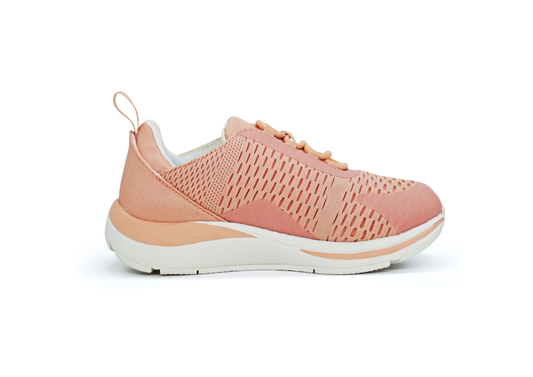
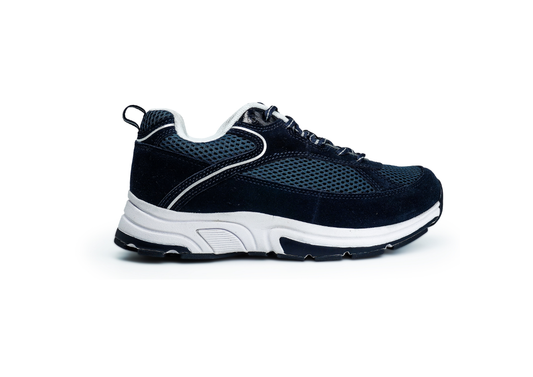
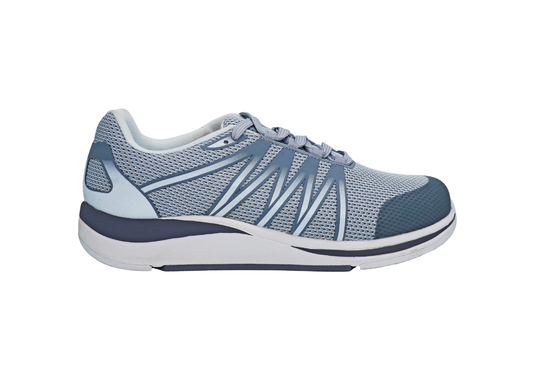
For those looking for the right gear to support this journey, choosing stable mens orthopedic walking shoes or womens orthopedic athletic shoes can provide the necessary foundation for these weighted movements.
Isolating the Soleus: The Secret to Deep Calf Strength
The soleus muscle lies hidden under the visible calf and absorbs massive force whenever you walk with a bent knee. Neglecting it creates uneven heel stress. To isolate it, perform the Seated Heel Raise:
-
Sit in a chair with knees at a 90-degree angle.
-
Rest a heavy weight across your lower thighs.
-
Push through the balls of your feet to lift your heels.
-
Lower slowly (3 seconds) to the floor.
Orthopedic Footwear During Achilles Recovery: What to Look For
Your exercises rebuild the tendon; your shoes influence how much you irritate it all day. Look for these features in orthopedic shoes for women and men:
-
Slight heel lift (heel-to-toe drop): Decreases strain on the Achilles.
-
Firm heel counter: Controls rearfoot motion.
-
Cushioning + stability: Absorbs impact without being "floppy."
-
Avoid: Completely flat footwear or worn-out flip-flops during a flare-up.
Creating Your 15-Minute Daily Achilles Rehab Routine
-
Morning (5 mins): Perform static isometric holds to melt away overnight stiffness.
-
Evening (10 mins): Complete eccentric heel drops and seated raises.
-
Footwear Check: Wear supportive orthopedic walking shoes for daily activity.
-
Rest: Schedule one full day off weekly.
Q&A: Quick Recovery Tips
-
Are heel lifts good? Yes, temporarily, to reduce stretch.
-
Should I stop walking? No, but scale back and avoid hills or barefoot walking.
-
When to see a doctor? If you hear a "pop," see visible swelling, or cannot perform a single-leg calf raise.
Start with gentle isometric holds today. Combine consistent loading with supportive footwear to ensure your recovery "sticks" and you can return to pain-free movement.
