


Top Tips for Choosing Long Lasting Shoes
Top Tips for Choosing Long Lasting Shoes
Imagine spending ₹4,000 on stylish sneakers, only to have the sole peel away before the year is out. Many treat this as "bad luck," but it is often the predictable result of fast-fashion construction designed for short product cycles. If your goal is long lasting shoes that also protect your knees, hips, and lower back, durability cannot be separated from structure. The same shortcuts that make shoes fall apart—thin midsoles, weak heel counters, and flimsy uppers—also reduce support and stability.
Calculating what a pair of shoes actually costs you over its lifetime reveals the true price of your wardrobe. Buying a flimsy pair twice a year costs far more than investing in sturdy shoes that can be repaired and maintain orthopedic alignment for years. Escaping the disposable footwear loop requires shifting your mindset toward long-term value: durability, repairability, and comfort.
Bolted vs. Taped: Why Stitched Soles Outlast Glued Ones

We’ve all had a favorite shoe start “talking” when the sole begins to peel. This is common in cemented construction, where the upper and sole are simply glued. Heat, moisture, and repeated flexing weaken this bond. From an orthopedic perspective, cemented shoes often use cheaper foam stacks that compress quickly, reducing shock absorption.
To escape this, look for the Goodyear welt: a stitched method that effectively bolts the shoe together. When comparing Goodyear welt vs. cement construction, watch out for molded “fake” stitches.
Quick Stitch Test Checklist:
-
Look for a visible seam on the outsole perimeter.
-
Check for a real welt strip between the upper and sole.
-
Look for internal stitching under the insole.
The Skin-Deep Truth About Leather Grades
Having a stitched foundation won’t save a shoe if the upper disintegrates. When asking which shoe materials last the longest, shoppers often trust the “Genuine Leather” stamp. Unfortunately, this is often a lower-grade layer coated in plastic that cracks over time.
For long-term use, full-grain leather is the most resilient. It retains the dense outer fiber layer and develops a patina rather than peeling. For those seeking orthopedic footwear for men, a durable upper is vital to keep the heel seated properly.
The Thumb Test: Press your thumb into the upper; quality leather should form fine wrinkles rather than stiff, plastic-like cracking.
The “Value” Lens: Cost-Per-Wear Calculation
A cheaper pair that fails in six months is often the most expensive option. For those managing specific conditions, investing in shoes for plantar fasciitis or flat feet solutions provides a much better return on health.
| Factor | Low-Quality Shoe | High-Quality/Orthopedic Shoe |
| Initial Cost | Low (₹1,500 - ₹2,500) | Moderate/High (₹4,000 - ₹7,000) |
| Lifespan | 6 Months | 2–5 Years (with care) |
| Repairability | Non-repairable | Often Resoleable |
| Support | Collapses quickly | Maintains alignment |
Orthopedic Footwear: Durability That Protects Alignment
When a shoe breaks down, your joints pay the price. Well-designed diabetic footwear represents a disciplined approach to construction, prioritizing stable geometry.
Orthopedic Durability Anchors:
-
Rigid Heel Counter: Stabilizes rearfoot motion. (See the Stable Men's Walking Shoe).
-
Supportive Midfoot: A firm shank or torsionally stable midsole.
-
Removable Footbed: Allows for custom orthotics.
-
Adequate Toe Box: Reduces pressure and upper wear.
If you struggle with specific pain, explore targeted collections like arthritis footwear or options for high arch support.
Essential Maintenance: The 24-Hour Rule
Wearing the same pair daily traps moisture and accelerates breakdown. Follow the 24-hour rule: rotate your pairs to allow full drying. For casual comfort that lasts, consider rotating between a primary shoe and a supportive Breezy Slipper or a Roman Slipper for men at home.
Orthopedic Footwear Q&A (Durability + Support)
Q: What makes orthopedic footwear different from regular "best durable shoes"? Orthopedic footwear, like the Aaron Comfort Shoe, emphasizes stable alignment and a last designed to reduce excessive motion, ensuring the shoe doesn't just "last" but continues to support correctly.
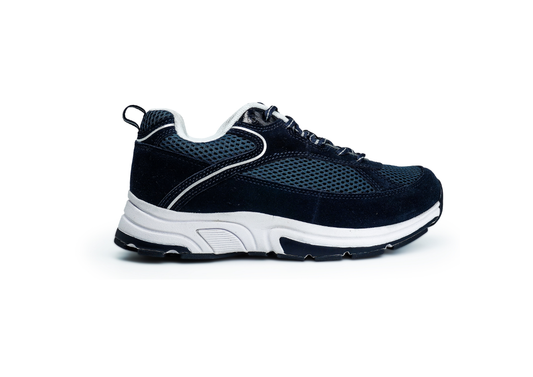
Q: Are soft cushioning shoes better for joint pain? Not always. Extremely soft midsoles can compress unevenly. A balanced system like the Sprinter Orthopedic Athletic Shoe provides cushioning with a stable base.
Q: How do I know if my shoe is worn out? If the heel counter softens, you notice leaning wear patterns, or the midsole stays "crushed," the support is compromised even if the tread looks okay. At this point, it's time to browse new arrivals in orthopedic footwear.
Q: Can I find durable summer options? Absolutely. Look for structured designs like the Sawyer Orthopedic Sandal or the Jackson Men’s Sandal which offer durability without the heat of a closed shoe.
Building a Sustainable Shoe Rotation
By prioritizing repairable construction and orthopedic-friendly stability, you move beyond disposable fashion. Whether you choose the Player Men's Walking Shoe for daily commutes or the Chippy Comfort for errands, investing in quality ensures your feet—and your wallet—stay protected for years to come.
